The short answer
Choose one compatible flavour base, one main cooked ingredient and enough liquid for the texture you want. Start small, cook any raw additions first, then add suitable leftovers for thorough heating. Soup is a useful format, but it does not make unsafe food safe.
Decide whether the soup is chunky or smooth
Firm cooked vegetables and beans can stay in pieces. Very soft vegetables can contribute to a blended base, using equipment suitable for hot liquids. A strong sauce from the original meal should guide the new flavour. Avoid combining several heavily seasoned leftovers merely because they all fit in the pot; the result may be difficult to balance.
US food-safety guidance specifies 165°F (74°C) for reheated leftovers; check with a food thermometer, including the centre.
Use a starting ratio, then observe
For a thick single bowl, roughly one cup of cooked vegetables or beans with three-quarters to one cup of compatible liquid is a useful starting point, not a universal recipe. Dense starches thicken differently from watery vegetables. Begin with less liquid and add gradually. If raw potato or dry grain is involved, use a method that accounts for its full cooking rather than this cooked-leftover shortcut.
Try the method
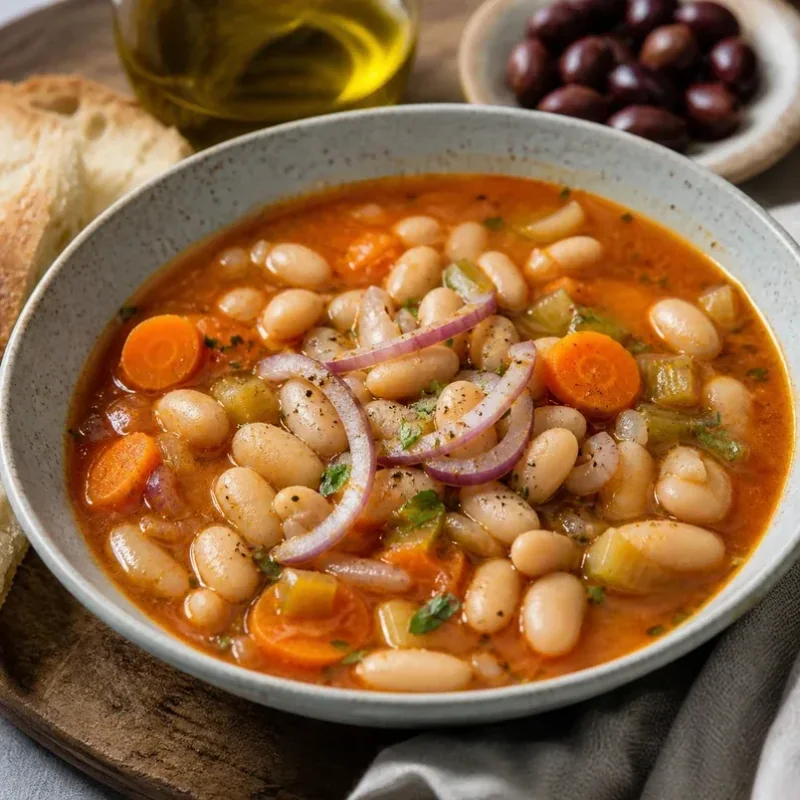
Worked example: cooked carrots and plain beans
- Check that both components have a suitable storage history and compatible seasoning. Reserve only the quantity needed for the intended meal.
- Soften a little fresh onion in oil if you want that base. Add liquid and let any raw additions become tender before the cooked leftovers join.
- Add the cooked carrots and beans, mash a few beans for body, and heat the soup thoroughly. Check the safe reheating guidance linked below.
- Adjust with a little water if too thick. Taste after dilution, then choose a small amount of a familiar finish rather than adding several sauces at once.
Troubleshoot in a useful order
Too thick: add liquid gradually. Too thin: mash some suitable solids or simmer carefully before adding more ingredients. Too salty: additional unsalted ingredients may dilute the taste, but can also create an oversized batch; do not keep expanding the pot without a portion plan. A burned flavour usually cannot be removed by extra herbs.
Practical decision aid
Build the soup in order
- First: one flavour direction and any raw preparation.
- Next: measured liquid and suitable cooked components.
- Last: safe heating, thickness adjustment and a small finish.
Take the next step
Recipes to explore
These are recipe previews from our collection. Check their ingredients and first step; they are separate from the flexible example above.
Questions people ask
A few useful answers
Can I put dry pasta into this starting ratio?
It needs additional liquid and cooking time. Use a pasta-soup method or cook it separately, then add only the amount needed for the serving.
Can I blend hot soup in any blender?
No. Follow the appliance's hot-liquid instructions and capacity limits. Use suitable equipment and handling rather than sealing hot liquid in an unsuitable container.
Food handling references
Practical examples are editorial suggestions. For storage and safe cooking, use food-specific guidance and product instructions.
- FoodSafety.gov: food-specific cold storage guidance
- FoodSafety.gov: safe cooking and reheating temperatures
- USDA: handling leftovers safely
Keep exploring
A useful next read
From this guide to your kitchen
Find a soup direction that fits your actual leftover ingredients.
In My Fridge helps you explore recipe options around your own ingredients, so the next dinner can start with what is already there.
Continue with In My FridgeComing soon for iPhone