The short answer
Cook watery or firm vegetables before they join the eggs, let excess moisture escape, and use a pan that keeps the mixture at a manageable depth. A frittata needs both vegetable preparation and a safe egg endpoint; a browned top alone is not enough.
Prepare fillings for the egg stage
Mushrooms, spinach and tomatoes can release liquid while eggs set. Cook or drain them appropriately before mixing. Raw potato needs enough prior cooking to become tender. Keep the filling in pieces that distribute evenly; a large cold chunk in the centre heats differently from small warm pieces. Avoid packing in every vegetable until there is too little egg to hold the dish together.
Choose a vessel and finish you can use safely
Check whether the pan and handle are oven-safe if the method finishes in the oven. A deep mixture requires a different cooking time from a thin one, and the centre can lag behind the edges. Follow a complete egg-dish method and use the official safe temperature reference. If you only have a stovetop pan, choose a recipe explicitly designed for that method rather than improvising an oven transfer.
For an ordinary egg dish such as a frittata, US guidance specifies 160°F (71°C). Casseroles containing meat or poultry need 165°F (74°C).
Try the method
Worked example: mushrooms and spinach as a filling
- Slice suitable mushrooms and cook them in a pan with room for moisture to evaporate. Keep the heat controlled so they do not burn while still wet.
- Add spinach near the end of the vegetable stage, then let excess liquid evaporate or drain appropriately. The filling should not sit in a puddle.
- Measure the prepared filling into a complete frittata recipe's stated egg quantity. Do not keep adding vegetables after the mixture is already full.
- Cook using the specified vessel and method, checking the centre with the appropriate temperature guidance. Rest and portion as the recipe directs rather than serving on surface colour alone.
Rescue the next attempt, not an unsafe centre
If a finished slice releases water, note which ingredient carried it. Pre-cooking or draining that ingredient is a better next change than increasing flour or cheese at random. If the centre is undercooked, it still needs safe cooking; covering the problem with a crisp topping does not solve it.
Practical decision aid
Check before adding eggs
- Tenderness: firm vegetables have completed their preparation.
- Moisture: no substantial pooled liquid around the filling.
- Equipment: the chosen pan supports the full cooking method.
Take the next step
Recipes to explore
These are recipe previews from our collection. Check their ingredients and first step; they are separate from the flexible example above.
Questions people ask
A few useful answers
Can roasted vegetables work as the filling?
Yes, if suitable and compatible, but account for their existing oil, seasoning and moisture. Keep their original storage history in mind.
Is Spanish tortilla the same dish?
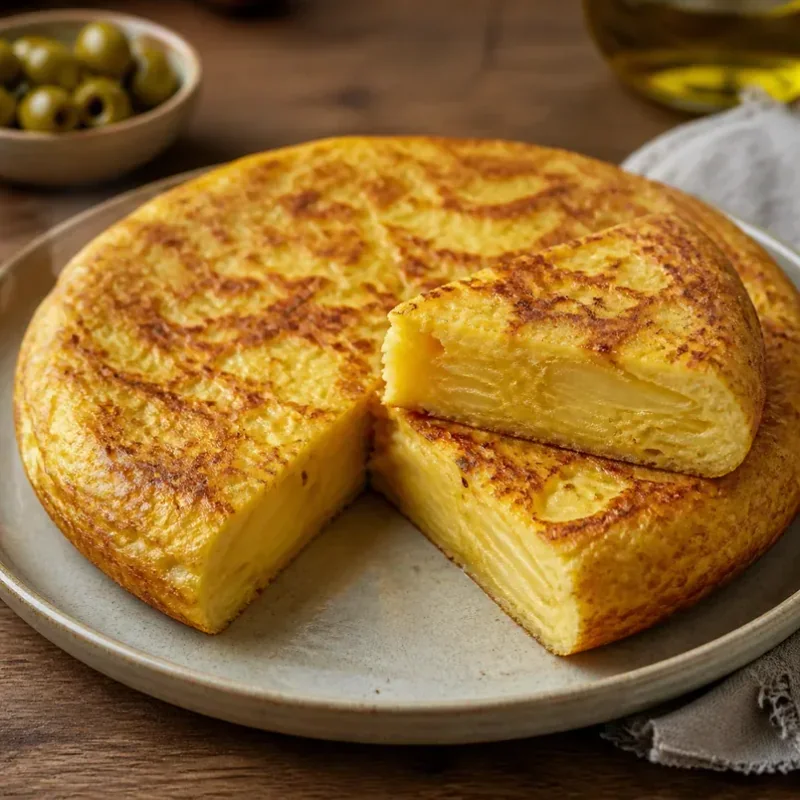
It is a distinct potato-and-egg preparation. The linked recipe is useful for understanding a structured egg dish, but follow its own quantities and handling rather than mixing methods.
Food handling references
Practical examples are editorial suggestions. For storage and safe cooking, use food-specific guidance and product instructions.
- FoodSafety.gov: food-specific cold storage guidance
- FoodSafety.gov: safe cooking and reheating temperatures
- USDA: handling leftovers safely
Keep exploring
A useful next read
From this guide to your kitchen
Find an egg recipe that matches your vegetables and equipment.
In My Fridge helps you explore recipe options around your own ingredients, so the next dinner can start with what is already there.
Continue with In My FridgeComing soon for iPhone