The short answer
Use suitable plain yogurt as a cold dressing, a spooned finish or a dip, choosing flavours that fit its thickness and tang. Add it to hot dishes only with a method that accounts for its behaviour. Sweetened yogurt is not a neutral replacement in a savoury sauce.
Read the type before choosing the use
Thick strained yogurt and a thinner plain yogurt make different dressings. Flavoured, sweetened and plant-based products also vary in ingredients and behaviour. Check the label, allergies and after-opening guidance. Decide how much remains and whether one dip would create more leftovers than it uses. A spooned finish can be a better job for a very small amount.
Keep cold uses straightforward
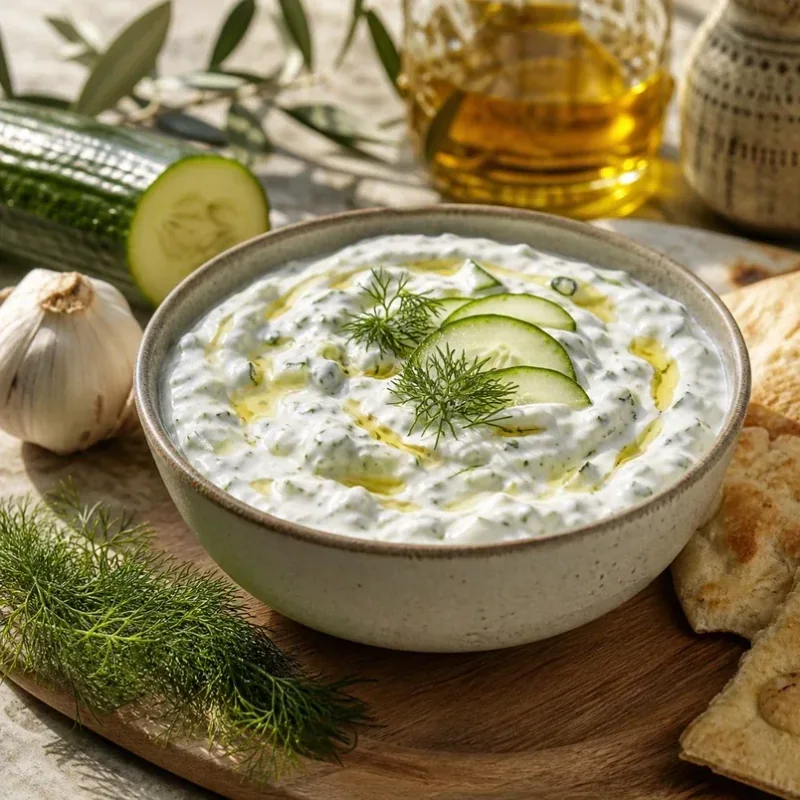
A little yogurt can connect cooked vegetables with bread or dress a bean plate. Add lemon, herbs or seasoning gradually so the sauce does not become thin or excessively sharp. Watery vegetables can dilute it too. The tzatziki recipe below includes a specific cucumber preparation for a reason; mixing undrained wet cucumber into yogurt gives a different result.
Try the method
Worked example: a small vegetable dressing
- Take only the suitable yogurt needed for the meal and keep the rest refrigerated. Begin with a few spoonfuls in a clean bowl.
- Add a small amount of a compatible seasoning or chopped tender herb if available. Taste before adding extra acid because the yogurt is already tangy.
- If the dressing is too thick, loosen with a little water in stages. If it is already thin, do not add liquid merely because another recipe uses it.
- Spoon over the portion of vegetables being served or offer it alongside bread. Keep unused dressing appropriately chilled and tied to the original ingredient's storage guidance.
Be cautious with direct hot-pan swaps
Yogurt can separate when added to intense heat, and it does not behave exactly like cream in every sauce. Choose a recipe written for yogurt or use it as a serving finish off the heat where appropriate. Do not assume a smooth appearance proves safety or that separation alone means spoilage; handling history and product condition are separate checks.
Practical decision aid
Choose a yogurt use
- Small amount: a serving finish.
- Thicker portion: a dip with controlled moisture.
- Hot dish: a method explicitly designed for yogurt's behaviour.
Take the next step
Recipes to explore
These are recipe previews from our collection. Check their ingredients and first step; they are separate from the flexible example above.
Questions people ask
A few useful answers
Can vanilla yogurt replace plain yogurt in a savoury dip?
It changes sweetness and flavour substantially. Choose a compatible sweet use or a different savoury ingredient instead of expecting the same dip.
Does turning yogurt into a sauce extend its storage time?
No. Adding herbs or dressing ingredients does not reset the original product's opening date or handling requirements.
Food handling references
Practical examples are editorial suggestions. For storage and safe cooking, use food-specific guidance and product instructions.
How we publish our guidesKeep exploring
A useful next read
From this guide to your kitchen
Find a practical meal that uses the plain yogurt you have.
In My Fridge helps you explore recipe options around your own ingredients, so the next dinner can start with what is already there.
Continue with In My FridgeComing soon for iPhone