The short answer
Give half a cabbage two or three planned uses instead of putting all of it into one oversized dish. A crisp accompaniment, a cooked skillet and a soup offer different textures. Choose portions and storage according to the cabbage's condition and the meals you will actually eat.
Weigh the remainder against your appetite
Half a large cabbage can still be a substantial quantity. Cut only what the next meal requires and store the rest appropriately. Do not force a huge raw salad because it appears to be the quickest way to finish it. If you routinely leave much unused, compare smaller purchases or another vegetable that fits your household better.
Change the cut and the format
Thin shreds suit a crisp salad or a quick cooked mixture; thicker pieces need a method that gives them time to soften. Cabbage in a soup can be one ingredient rather than the entire dish. Keep dressings separate from a stored crisp portion when that helps preserve texture. A cooked use should start with suitable cabbage, not be treated as a solution for spoilage.
Try the method
Worked example: three uses for a manageable remainder
- Reserve a small amount of thinly sliced suitable cabbage for a fresh accompaniment, prepared and stored appropriately. Dress only the portion being served.
- Plan another portion for a skillet with onion and a substantial companion such as ready-cooked beans or an available starch. Cut it to suit the cooking time.
- Allocate the rest to a deliberate soup session, or another appropriate storage plan if that session will not happen soon enough.
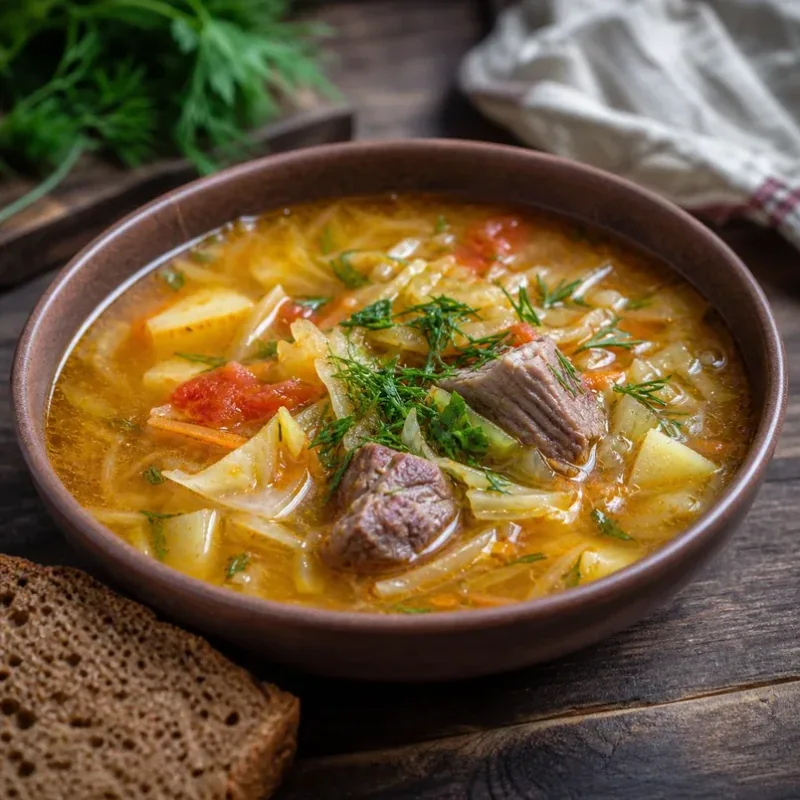
- Read the linked shchi recipe before choosing it: it includes additional ingredients and a long preparation, so it is a planned soup rather than an instant use-up shortcut.
Avoid three versions of the same plate
Keep the first meal crisp, the second cooked and the third liquid-based if those formats appeal to you. Use different compatible finishes from your existing pantry rather than buying a new sauce for each. If one format is something you dislike, replace it; a theoretically efficient sequence that nobody eats still creates unused food.
Practical decision aid
Give the cabbage three jobs
- Crisp: a small freshly prepared accompaniment.
- Cooked: a skillet with a chosen substantial companion.
- Soup: a planned recipe with time for all its ingredients.
Take the next step
Recipes to explore
These are recipe previews from our collection. Check their ingredients and first step; they are separate from the flexible example above.
Questions people ask
A few useful answers
Can every cabbage variety replace another unchanged?
No. Leaf texture and cooking behaviour vary. Choose a compatible recipe and adjust the cut and method rather than assuming all cabbages are identical.
Should I shred the entire remainder at once?
Only if that preparation fits your storage and near-term meals. Leaving a suitable portion unprepared may preserve more options and avoid a large container of dressed slaw.
Food handling references
Practical examples are editorial suggestions. For storage and safe cooking, use food-specific guidance and product instructions.
How we publish our guidesKeep exploring
A useful next read
From this guide to your kitchen
Explore cabbage recipes for the amount you still have.
In My Fridge helps you explore recipe options around your own ingredients, so the next dinner can start with what is already there.
Continue with In My FridgeComing soon for iPhone