The short answer
Choose what will give the bowl substance before adding stock: cooked beans, lentils prepared by their own method, or a measured amount of pasta. Start with less liquid than you might need and adjust. A soup that looks thin is not always fixed by adding more ingredients.
Pick the soup's main ingredient
Cooked beans can thicken a broth if some are mashed. Red lentils can break down into a softer base when cooked properly. Pasta absorbs liquid and continues changing the texture as the soup stands. Decide which one is central; adding all three without adjusting quantities often creates an unexpectedly large, thick pot.
Separate dry and cooked ingredients
Dry lentils or pasta need enough liquid and time for their own cooking. Ready-cooked beans need a later warming stage. The same distinction applies to leftover grains. Read the chosen recipe before pouring in stock, especially if you are reducing the batch. Soup is forgiving about some flavours but not about an uncooked ingredient's required preparation.
Try the method
Worked example: a small cooked-bean soup
- Start with about one cup of ready-cooked beans, a small amount of chopped onion or carrot, and roughly one cup of water or compatible stock for a thick single bowl.
- Soften the fresh vegetables in a little oil. Add liquid and simmer until the vegetables are tender before relying on beans to finish the meal.
- Add the beans and mash a few into the liquid for body. Heat through, then add more liquid in small amounts if you want a looser soup.
- Taste after adjusting thickness. Serve with bread if desired, or keep it as a thick bean bowl; do not add a large pasta portion just because the pot has room.
Plan the stored portion differently
If saving part of a soup with pasta, consider cooking pasta separately and combining only the serving needed now. That helps prevent the stored soup becoming a solid mass. Cool and store leftovers according to official guidance. A large pot is useful only if its portions have realistic destinations in the fridge or freezer.
Practical decision aid
Choose the centre of the bowl
- Cooked beans: texture plus a little mashed thickness.
- Red lentils: a softer base with measured cooking liquid.
- Pasta: portion carefully and account for continued absorption.
Take the next step
Recipes to explore
These are recipe previews from our collection. Check their ingredients and first step; they are separate from the flexible example above.
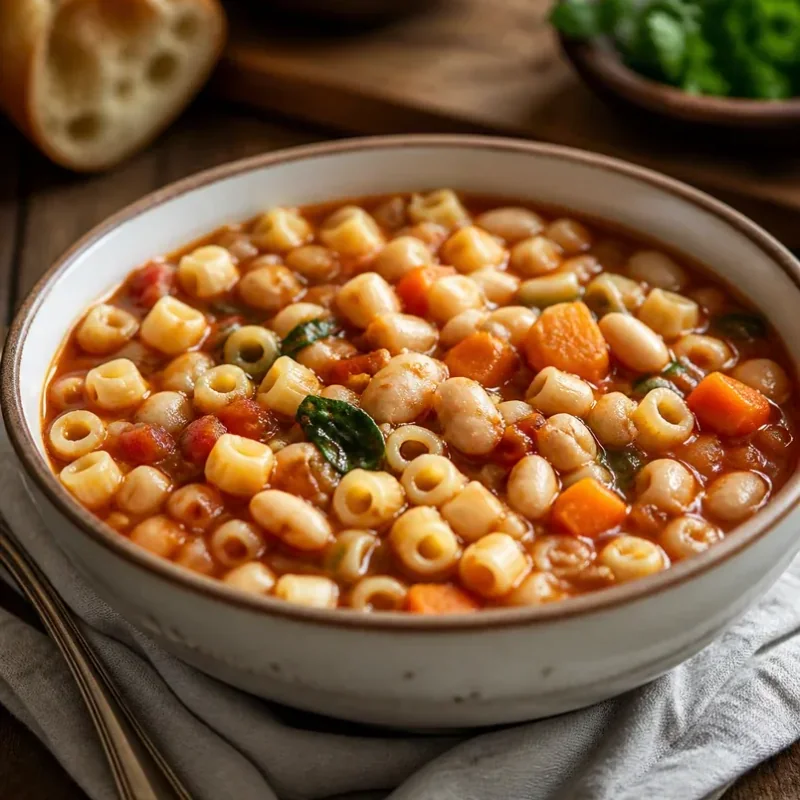 Soup
SoupPasta e Fagioli
A thick borlotti and small-pasta soup with tomatoes and vegetables, naturally thickened with some mashed beans.
55 min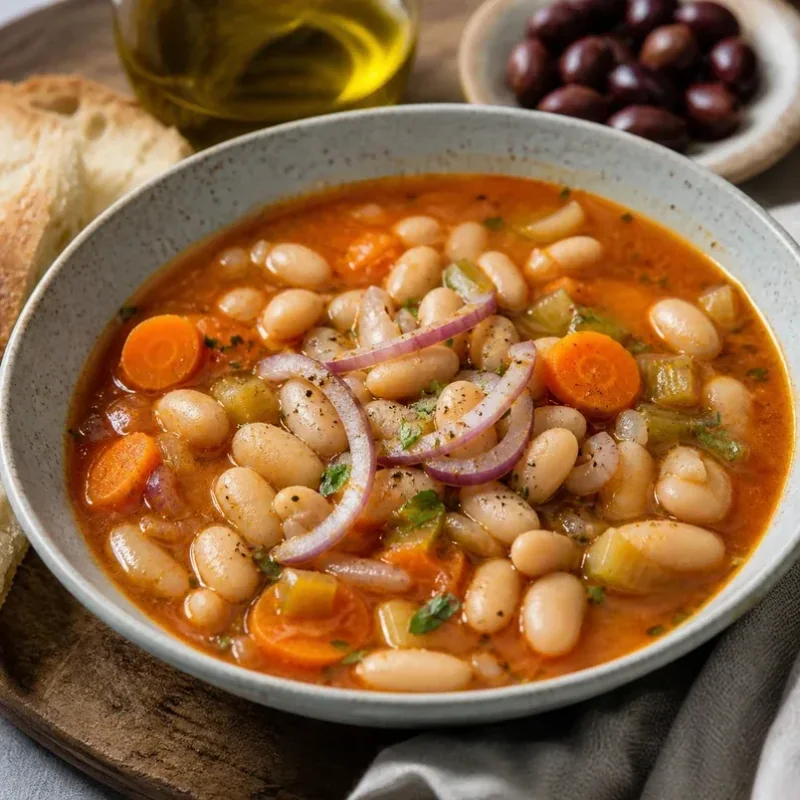 Soup
SoupFasolada
A hearty vegan white-bean soup with tomatoes, carrot, celery, onion, and olive oil.
1 hr 40 min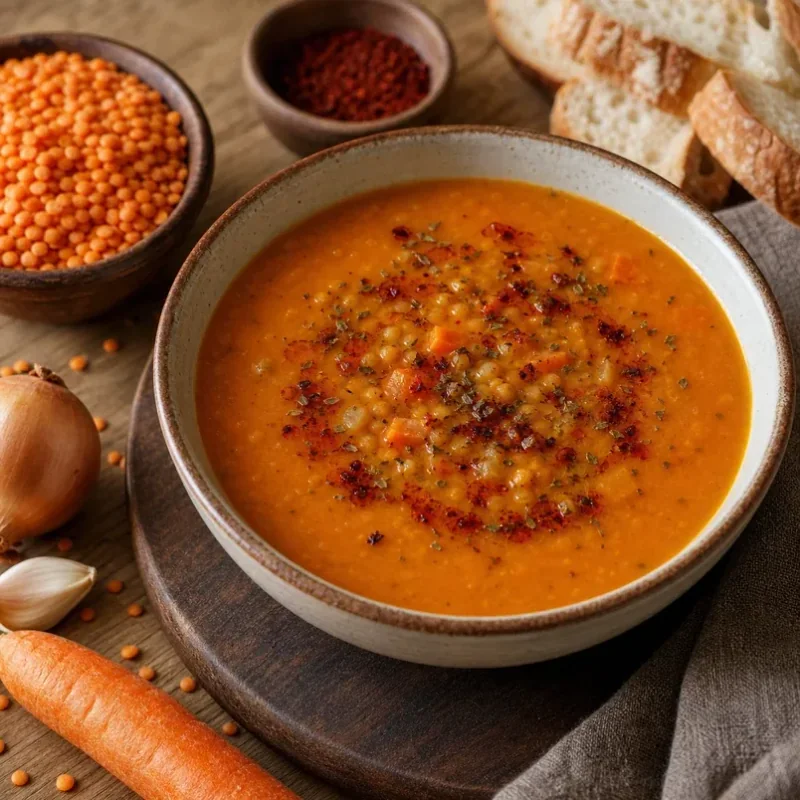 Soup
SoupMercimek Çorbası
A smooth Turkish red-lentil soup with carrot and potato, finished with cumin and spiced butter.
55 minQuestions people ask
A few useful answers
Why is yesterday's soup much thicker?
Pasta and some legumes absorb liquid or release starch as they stand. Add liquid gradually when reheating and check seasoning after dilution.
Is stock essential?
Some recipes use water and build flavour from their ingredients. Follow the chosen recipe; concentrated salty stock is not automatically an improvement.
Food handling references
Practical examples are editorial suggestions. For storage and safe cooking, use food-specific guidance and product instructions.
How we publish our guidesKeep exploring
A useful next read
From this guide to your kitchen
Explore soups that fit your pantry and portion size.
In My Fridge helps you explore recipe options around your own ingredients, so the next dinner can start with what is already there.
Continue with In My FridgeComing soon for iPhone