The short answer
Choose whether mushrooms should brown, soften into sauce or join a soup. Give them space when browning and allow released liquid to evaporate before adding a thick sauce. Use only suitable mushrooms from a known food source; this is not a wild-mushroom identification guide.
Pick a result before filling the pan
A crowded deep pile tends to release and retain moisture. That may be fine for a soup base but disappointing when you want browned slices. Prepare a manageable batch and use an appropriately sized pan. Clean and trim according to the mushrooms and their condition; similar-looking varieties can have different preparation requirements.
Let moisture guide the next step
If liquid pools, decide whether to reduce it or use it in a sauce. Do not add more oil automatically when the main problem is water. Once the desired texture is reached, add compatible aromatics or sauce ingredients at a stage that prevents them burning. Delicate garlic can darken before a wet mushroom pile finishes cooking.
Try the method
Worked example: mushrooms for pasta tonight
- Measure the pasta serving first and prepare the suitable mushrooms in even slices. Keep any planned fresh herbs or dairy finish separate.
- Cook the mushrooms in a pan with enough surface area. If necessary, use a smaller batch rather than trapping all of them in a deep layer.
- Allow the moisture to reduce, then add a compatible sauce or a little reserved pasta water when combining with the cooked pasta.
- Serve the amount needed. If you deliberately cook extra mushrooms, portion and store them safely for a named second use, such as an egg filling prepared by a complete egg-dish method.
When a sauce is the better answer
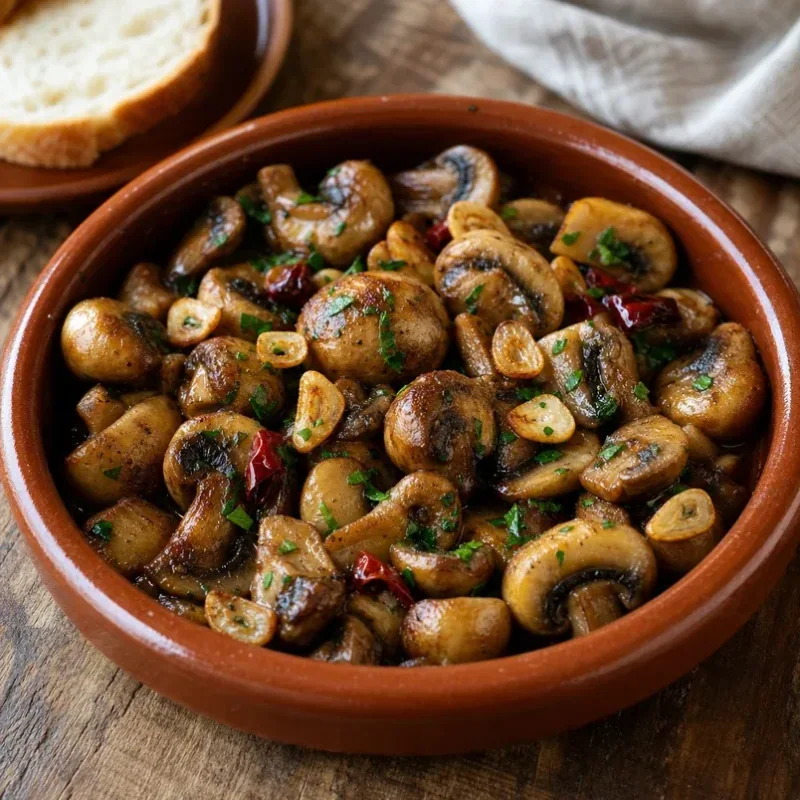
Soft mushrooms can be a useful sauce ingredient without being crisp. Champiñones al ajillo below is a fuller garlic-mushroom preparation with specific additional ingredients. Read its list rather than assuming any spare mushroom can become that exact dish with no changes. If the mushrooms are spoiled or their identity is uncertain, choose another ingredient.
Practical decision aid
Choose the mushroom direction
- Browning: enough surface area and moisture control.
- Sauce: accept softness and connect it to a starch.
- Second meal: a planned, safely stored portion with a specific use.
Take the next step
Recipes to explore
These are recipe previews from our collection. Check their ingredients and first step; they are separate from the flexible example above.
Questions people ask
A few useful answers
Why are my mushrooms simmering instead of browning?
The pan may be crowded or retaining too much liquid. Reduce the batch size or allow evaporation, with heat appropriate to the pan and ingredients.
Can I use mushrooms I found outdoors?
This guide does not identify wild mushrooms or establish edibility. Use mushrooms from a known suitable food source and do not infer safety from a recipe photograph.
Food handling references
Practical examples are editorial suggestions. For storage and safe cooking, use food-specific guidance and product instructions.
How we publish our guidesKeep exploring
A useful next read
From this guide to your kitchen
Explore mushroom meals that fit your available ingredients.
In My Fridge helps you explore recipe options around your own ingredients, so the next dinner can start with what is already there.
Continue with In My FridgeComing soon for iPhone