The short answer
Count the meals and people first, then inventory usable food by quantity. Build meals around the substantial ingredients already available and list only genuine gaps. This approach can make a small shop more deliberate, but local prices and available food determine what is possible.
Make the inventory specific
Write “enough pasta for two meals” or “one ready-cooked bean can” instead of a long list of names. Include freezer food and unopened pantry items, but check required cooking and storage. Separate ingredients that form a meal from small flavour additions. Oil, spices and a spoonful of sauce cannot replace a substantial food simply because they occupy cupboard space.
Give each purchase more than one job
An onion that starts two pots may be more useful than an unfamiliar garnish for one dinner. Compare pack price, usable amount and preparation requirements. A large cheap pack is not helpful if you cannot store or eat it. Keep preferences in the plan too: a meal nobody will eat does not become good value through a low ingredient price.
Try the method
Worked example: two evenings from an existing cupboard
- Suppose pasta, canned tomatoes and a ready-cooked bean can are already available. Estimate whether their quantities cover the people eating and both intended meals.
- Choose tomato pasta for one meal and a bean-and-tomato pot with an available staple for the other. Reserve ingredients before cooking the first dish.
- If a substantial companion is genuinely missing, compare a small practical purchase such as bread or another staple you use regularly, using current local prices.
- Write only that gap on the shopping list. Avoid buying extra sauces and garnishes for a recipe that was meant to use existing food.
Keep the budget claim honest
This guide does not promise a universal meal price or nutritional adequacy from an unknown cupboard. If available food is insufficient, a clever recipe cannot remove that shortage. The useful task is to make the gap visible and avoid accidental extra purchases. For ongoing difficulty obtaining enough food, local support options may be more useful than another recipe search.
Practical decision aid
Check the smallest shopping list
- Coverage: count people and meals, not just ingredients.
- Overlap: choose purchases with a second realistic use.
- Reality: use current local prices and the storage you actually have.
Take the next step
Recipes to explore
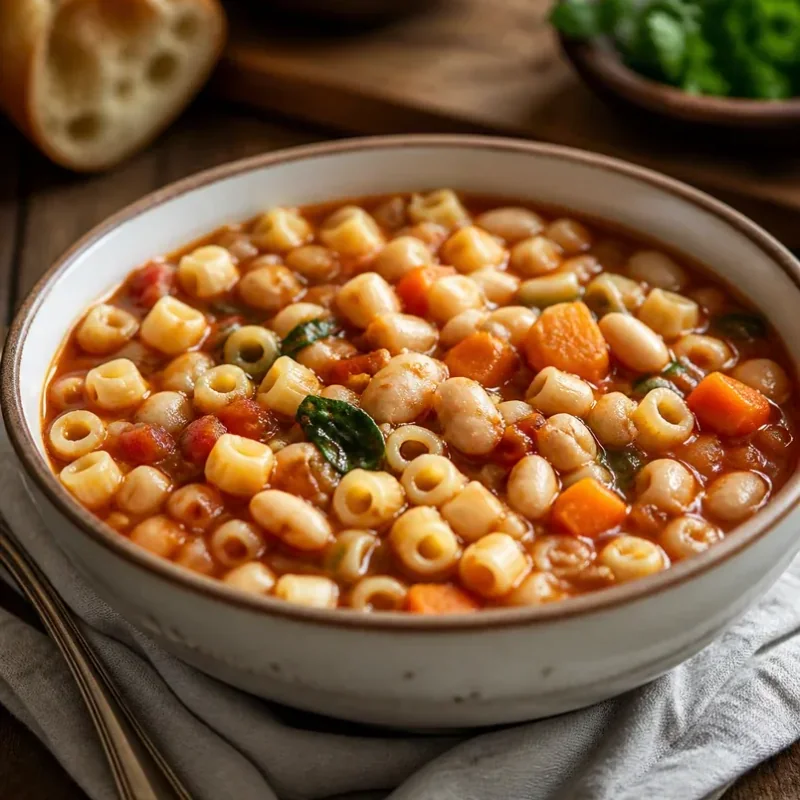
These are recipe previews from our collection. Check their ingredients and first step; they are separate from the flexible example above.
Questions people ask
A few useful answers
Should I buy dried beans because the unit price is lower?
Consider cooking time, fuel, preparation and storage as well as price. Ready-cooked beans and dried beans solve different immediate problems.
Can I plan without a precise recipe?
Use simple familiar formats, but keep quantities and required preparation clear. A vague promise to make “something with rice” is less useful than assigning a measured portion to a specific meal.
Food handling references
Practical examples are editorial suggestions. For storage and safe cooking, use food-specific guidance and product instructions.
How we publish our guidesKeep exploring
A useful next read
From this guide to your kitchen
Explore dinners that start with what you have already bought.
In My Fridge helps you explore recipe options around your own ingredients, so the next dinner can start with what is already there.
Continue with In My FridgeComing soon for iPhone