The short answer
Choose a potato dish whose whole method fits your vessel. Small, even pieces make timing easier to manage, but browning, simmering and setting eggs are separate stages. One pan limits cookware; it does not eliminate preparation bowls or attention.
Audit the method, not the title
A dish may be called a skillet dinner yet ask you to boil potatoes in another pot first. Look for pre-cooked ingredients, oven transfers and batch frying. Check whether your pan has a suitable lid and whether it is oven-safe if the recipe needs that. A single-pot stew can be easier than a single-pan tortilla even when its elapsed time is longer.
Use moisture first when potatoes need softening
Tenderness and crispness ask for different conditions. A little moisture and a lid can help small potato pieces soften; uncovered cooking then allows moisture to escape. If you begin with high heat and no plan for the centre, the surface can darken before the potato is cooked. Keep pieces evenly sized and test tenderness rather than relying on colour.
Try the method
Worked example: a small potato-and-onion skillet
- For a modest portion, cut two small potatoes into even small cubes and slice part of an onion. Use a pan that gives the food space rather than a deep heap.
- Cook the potatoes with a little oil. Add a small splash of water and cover if they need help softening; keep the heat controlled and check before the pan dries out.
- Once nearly tender, uncover and let excess moisture evaporate. Add onion at a stage that gives it time to soften without burning.
- Finish as a potato plate, or follow a specific egg recipe for adding and safely cooking eggs. Do not treat a browned potato surface as proof that an added egg mixture is done.
Keep the rest of dinner simple
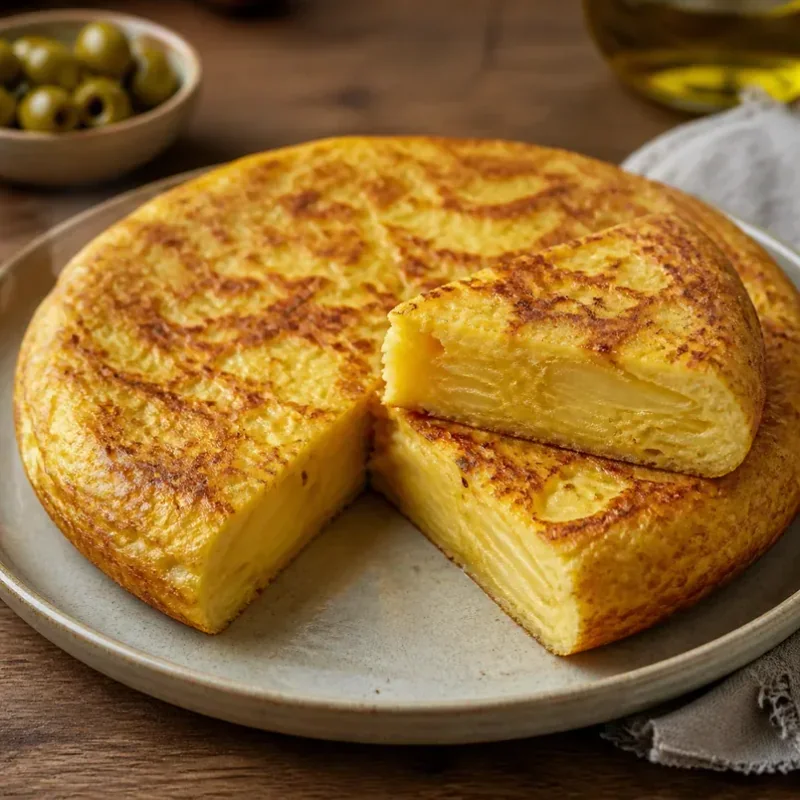
Adding several sides can undo the point of a one-vessel plan. Choose a ready-to-serve accompaniment if you want one, or make the main pot substantial enough for your appetite. For a structured potato-and-egg meal, read the Spanish tortilla recipe below; it has its own preparation and handling requirements.
Practical decision aid
Check your one-vessel plan
- Before cooking: identify hidden boiling or oven stages.
- During cooking: allow time for the potato centre.
- At serving: avoid adding several separate side projects.
Take the next step
Recipes to explore
These are recipe previews from our collection. Check their ingredients and first step; they are separate from the flexible example above.
Questions people ask
A few useful answers
Can I double a one-pan meal in the same pan?
Only if the vessel and method can accommodate it. Crowding changes moisture and cooking; two batches may be more reliable than a deep pile.
Are pancakes a low-effort one-pan dinner?
They use one frying surface but often require grating, draining and repeated batches. Count those tasks when deciding how much work you want.
Food handling references
Practical examples are editorial suggestions. For storage and safe cooking, use food-specific guidance and product instructions.
How we publish our guidesKeep exploring
A useful next read
From this guide to your kitchen
Find potato recipes that suit your available cookware.
In My Fridge helps you explore recipe options around your own ingredients, so the next dinner can start with what is already there.
Continue with In My FridgeComing soon for iPhone